Long March 3B/E Launch: Time & How to Watch (23 July 2026)
公開 · 更新
Long March 3B/ECASCXichang Satellite Launch CenterChina launchpreview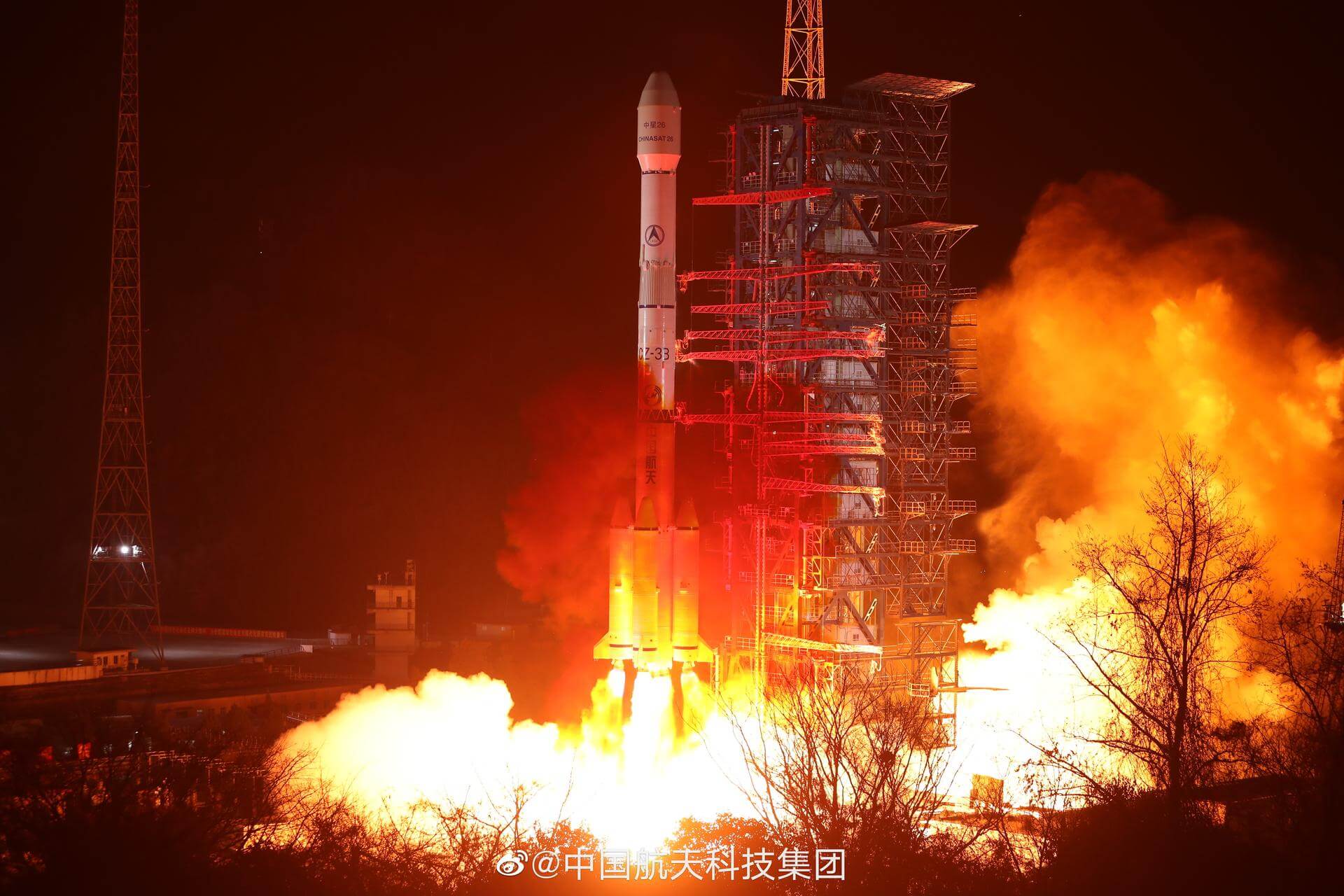
打ち上げ概要
| Rocket | Long March 3B/E |
| Operator | China Aerospace Science and Technology Corporation |
| Pad | Launch Complex 2 (LC-2), Xichang Satellite Launch Center, People's Republic of China |
| T-0 (UTC) | 2026年7月23日 12:00 |
| Status | In Flight |
When is the launch?
A Long March 3B/E rocket is scheduled to lift off on 23 July 2026 at 11:00 UTC from Launch Complex 2 (LC-2) at the Xichang Satellite Launch Center in the People's Republic of China. The mission is operated by the China Aerospace Science and Technology Corporation (CASC).
The launch status is currently listed as TBC (to be confirmed), which is normal for Chinese missions. CASC rarely publishes precise timing far in advance, and the window may shift by hours or days. For the latest confirmed time, check our rocket launch schedule.
| Detail | Information |
|---|---|
| Rocket | Long March 3B/E |
| Provider | China Aerospace Science and Technology Corporation |
| Launch site | LC-2, Xichang Satellite Launch Center |
| Target time (UTC) | 23 July 2026, 11:00 |
| Status | To be confirmed (TBC) |
What is the payload?
The payload for this mission has not been publicly disclosed. Chinese launches from Xichang frequently deploy satellites into geostationary transfer orbit (GTO), and the Long March 3B/E is the workhorse for these high-energy trajectories. Typical customers include communications satellites, navigation spacecraft, and other national or commercial payloads.
Because official details are limited, we will not speculate on the exact payload, mass, or destination orbit. We will update this article and our latest launch news as soon as CASC confirms the mission profile.
About the Long March 3B/E
The Long March 3B is a three-stage rocket augmented by four liquid-fueled boosters, and it is China's most powerful launcher dedicated to GTO missions. The enhanced "E" variant features a stretched first stage and boosters for greater payload capacity, allowing it to lift roughly 5.5 tonnes to geostationary transfer orbit. It has flown numerous times, delivering many of China's BeiDou navigation satellites and commercial communications spacecraft.
The rocket burns hypergolic propellants (unsymmetrical dimethylhydrazine and dinitrogen tetroxide) in its lower stages, with a cryogenic hydrogen-oxygen upper stage. Xichang, located in mountainous Sichuan Province, is China's primary site for high-orbit and geostationary missions.
How to watch live
Chinese launches are not always broadcast live, and coverage—when available—typically appears through state media outlets after liftoff. Confirmed video is often released shortly before or after the launch rather than as a continuous countdown stream.
The most reliable way to follow the mission in real time is through Cosmik. Our launch tracker displays the countdown, and once the payload reaches orbit you can watch it circle Earth on our live 3D solar system and satellite map. You can also see how the new spacecraft fits among the thousands of objects already in orbit and learn how to track satellites yourself.
Why does this launch matter?
The Long March 3B/E remains central to China's expansion of its space infrastructure, particularly for high-value assets bound for geostationary and medium Earth orbits. Each mission adds to a busy Chinese launch cadence that continues to grow year over year, making Xichang one of the most active spaceports for high-orbit deployments.
Whether this flight carries a communications satellite, a navigation spacecraft, or an undisclosed government payload, it contributes to a constellation of assets that shape global connectivity, positioning, and observation.
Key facts at a glance
- Launch date: 23 July 2026
- Time: 11:00 UTC (to be confirmed)
- Rocket: Long March 3B/E
- Site: LC-2, Xichang Satellite Launch Center, China
- Operator: China Aerospace Science and Technology Corporation
For more background, see the Long March 3B, Xichang Satellite Launch Center, and CASC pages. Launch data is sourced from The Space Devs Launch Library.
Follow the launch live on Cosmik
Don't miss liftoff. Track the countdown on our launch schedule, follow the newly deployed satellite on the live 3D map, and enable free launch alerts so you're notified the moment the time is confirmed and the rocket flies.
このミッションを3Dでライブ追跡し、打ち上げ前に無料アラートを受け取りましょう。
ライブマップを開く →出典
今後の打ち上げ
- ファルコン9、SDA第2群追跡衛星打上げ 9/30 — 2026年9月
- Falcon9、SDA追跡層C衛星を2026年9月30日打上げ — Q3 2026
- Falcon 9、SDA Tranche 1輸送層衛星を打ち上げ 9月30日 — Q3 2026
打ち上げ関連記事
- Starship Flight 13 打ち上げ成功:2026年7月24日ミッション詳細 — 2026年7月24日, 22:51 UTC
- Kinetica 1 Launch: July 24, 2026 Time & How to Watch — 2026年7月23日, 23:33 UTC
- Kinetica 1、5機の衛星打ち上げ成功 — 2026年7月23日レポート — 2026年7月23日, 23:33 UTC
- Gravity-1、黄海から9機の衛星を打ち上げ(2026年7月22日) — 2026年7月22日, 02:54 UTC
- Gravity-1 Launch: Sea-Based Liftoff Set for 31 July 2026 — 2026年7月22日, 02:50 UTC
- Falcon 9がMRV-1を打ち上げ|ケープカナベラル 2026年7月21日 — 2026年7月21日, 21:15 UTC