SDA Tranche 1 Transport Layer F — launch time & how to watch
Published · Updated
Falcon 9SpaceXSDATranche 1 Transport Layerpreview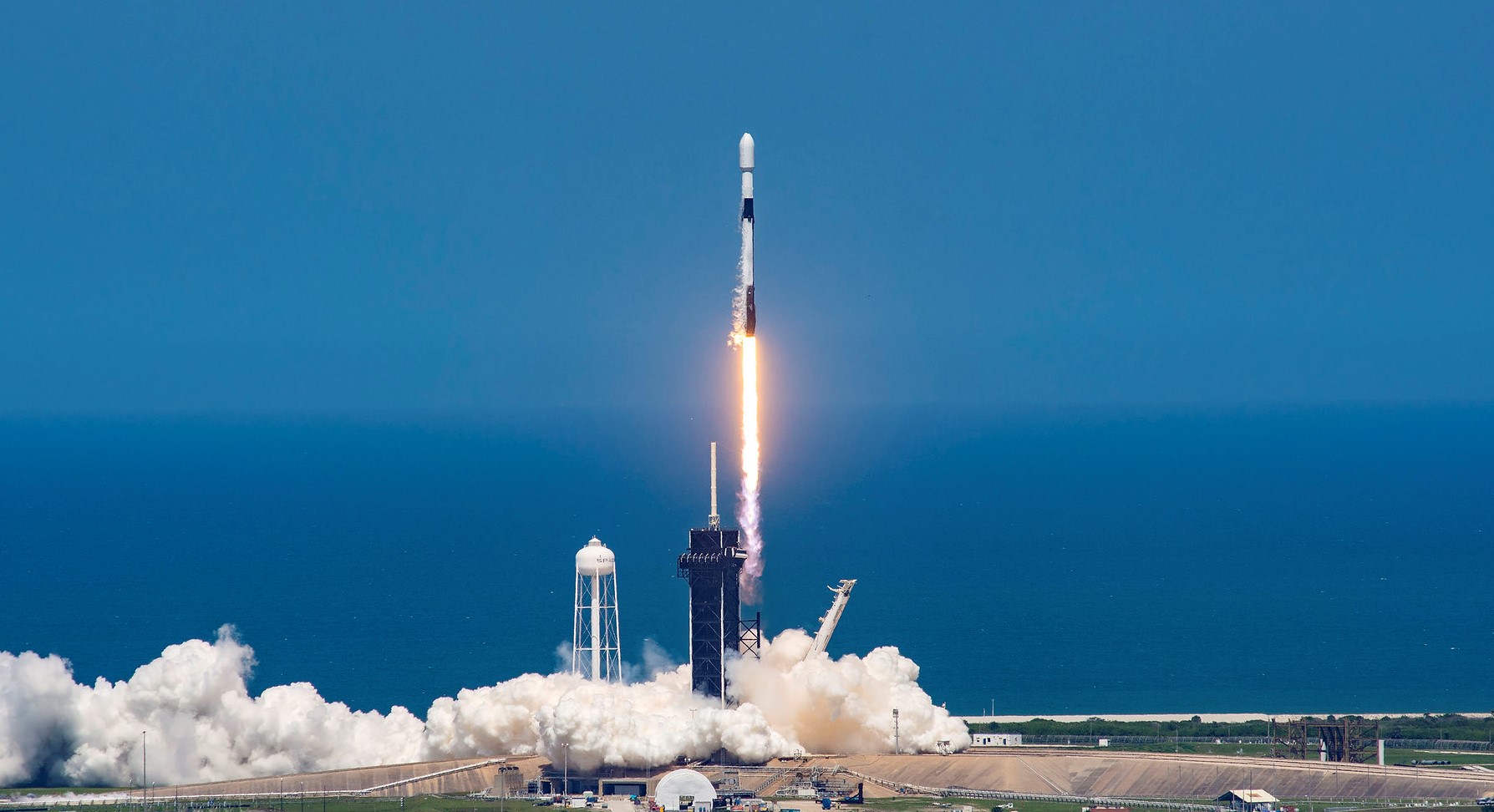
Launch facts
| Rocket | Falcon 9 Block 5 |
| Operator | SpaceX |
| Pad | Space Launch Complex 4E, Vandenberg SFB, CA, USA |
| Launch window | Q4 2026 — date TBC |
| Status | TBD |
🚀 SDA Tranche 1 Transport Layer F — launch time & how to watch
No confirmed launch date yet
The schedule only says Q4 2026. The day and the liftoff time don't exist yet — not here, not anywhere. There's nothing to count down to.
🚀 No confirmed launch date yet
We'll tell you the moment it gets a real date — and again about an hour before liftoff. Nothing else.
Free · no account · unsubscribe anytime
✈ TelegramWhat is launching?
A SpaceX Falcon 9 Block 5 rocket is scheduled to launch a batch of the Space Development Agency's (SDA) Tranche 1 Transport Layer satellites in Q4 2026 from Space Launch Complex 4E (SLC-4E) at Vandenberg Space Force Base, California. The mission places U.S. military mesh-network communications satellites into low Earth orbit.
The Falcon 9 is a two-stage, partially reusable orbital rocket built by SpaceX. The Block 5 is its final, most-reused variant, with individual boosters flying more than 20 times and turnaround measured in weeks rather than months.
When is the launch?
The launch is currently set for a No Earlier Than (NET) date of Q4 2026. The status is listed as TBD, so the exact liftoff time within the day may shift as SDA and SpaceX finalize the schedule. Check the rocket launch schedule on Cosmik for the latest confirmed time.
What is the payload?
The payload is part of the SDA's Tranche 1 Transport Layer, the operational first generation of the Pentagon's Proliferated Warfighter Space Architecture. The Transport Layer is a low-latency, laser-linked data relay constellation designed to move targeting and command data between sensors and shooters across the globe.
- The full Tranche 1 Transport Layer is planned at roughly 126 to 158 satellites distributed across multiple orbital planes.
- Satellites operate in low Earth orbit at altitudes near 1,000 km.
- Each spacecraft carries optical inter-satellite links to form a resilient mesh network independent of ground stations.
According to the Space Development Agency, the Transport Layer provides the connective backbone for the Missile Warning and Tracking Layer, enabling rapid detection and targeting of advanced threats such as hypersonic weapons.
Where is it launching from?
This mission lifts off from SLC-4E at Vandenberg Space Force Base in California, SpaceX's primary West Coast pad. Vandenberg's location supports launches into high-inclination and polar orbits by flying south over the Pacific, ideal for constellations that need global coverage. Explore other missions from the site on the Vandenberg launch hub.
Is the booster reused?
SpaceX routinely recovers Falcon 9 first stages for reuse. On West Coast missions, boosters land either on the droneship Of Course I Still Love You in the Pacific or, when performance allows, back at Landing Zone 4 near the pad. Reuse is central to SpaceX's cadence, which has exceeded 100 Falcon launches in a single year. See more SpaceX flights on the SpaceX launch page.
How to watch live
SpaceX typically begins its webcast on X and its website about 15 minutes before liftoff. Government payload missions sometimes carry reduced coverage that ends after fairing deployment. Confirmed timing, a countdown, and streaming links will appear on Cosmik as the date approaches.
Track it on Cosmik
You can follow the rocket's trajectory and watch the deployed Transport Layer satellites join their orbital planes on our live 3D solar system and satellite map. To learn how orbital tracking works, see our guide on how to track satellites.
Why does this mission matter?
The Tranche 1 Transport Layer marks the shift from experimental demonstration to operational capability for the SDA's proliferated architecture. Rather than relying on a handful of large, expensive satellites, the agency is fielding many smaller spacecraft that are cheaper to replace and harder to disable. Each Falcon 9 launch delivers a cluster of these satellites, steadily building out the mesh network across multiple planes.
| Detail | Information |
|---|---|
| Rocket | Falcon 9 Block 5 |
| Provider | SpaceX |
| Payload | SDA Tranche 1 Transport Layer |
| Launch site | SLC-4E, Vandenberg SFB, CA |
| NET date | Q4 2026 |
| Status | TBD |
Launch data is sourced from The Space Devs Launch Library. For the latest updates and other upcoming missions, browse the latest launch news.
Follow the launch live
Don't miss liftoff. Enable free launch alerts on Cosmik to get notified before the countdown begins, then watch the Falcon 9 and its SDA Transport Layer payload in real time on our live 3D map.
Follow this mission live in 3D and get a free alert before liftoff.
Open the live map →Sources
Next launches
- Dragon CRS-2 SpX-35 — launch time & how to watch — 13 October 2026, 10:33 UTC
- Martian Moon eXplorer (MMX) — launch time & how to watch — 19 October 2026, 19:41 UTC
- Amazon Leo (LV-01) — launch time & how to watch — 29 October 2026
More launch coverage
- Metop-SG B1 on Ariane 62 — launch time & how to watch — November 2026
- Cygnus CRS-2 NG-25 — launch time & how to watch — November 2026
- InnoSat-0 on HANBIT-Nano — launch time & how to watch — November 2026