Electron 'The Grain Goddess Provides' (iQPS 7): Launch 31 July 2026
Published 10 July 2026 · Updated 10 July 2026
Launch facts
| Rocket | Electron |
| Operator | Rocket Lab |
| Pad | Rocket Lab Launch Complex 1A, Rocket Lab Launch Complex 1, Mahia Peninsula, New Zealand |
| T-0 (UTC) | 31 July 2026 at 00:00 |
| Status | TBD |
What is this launch?
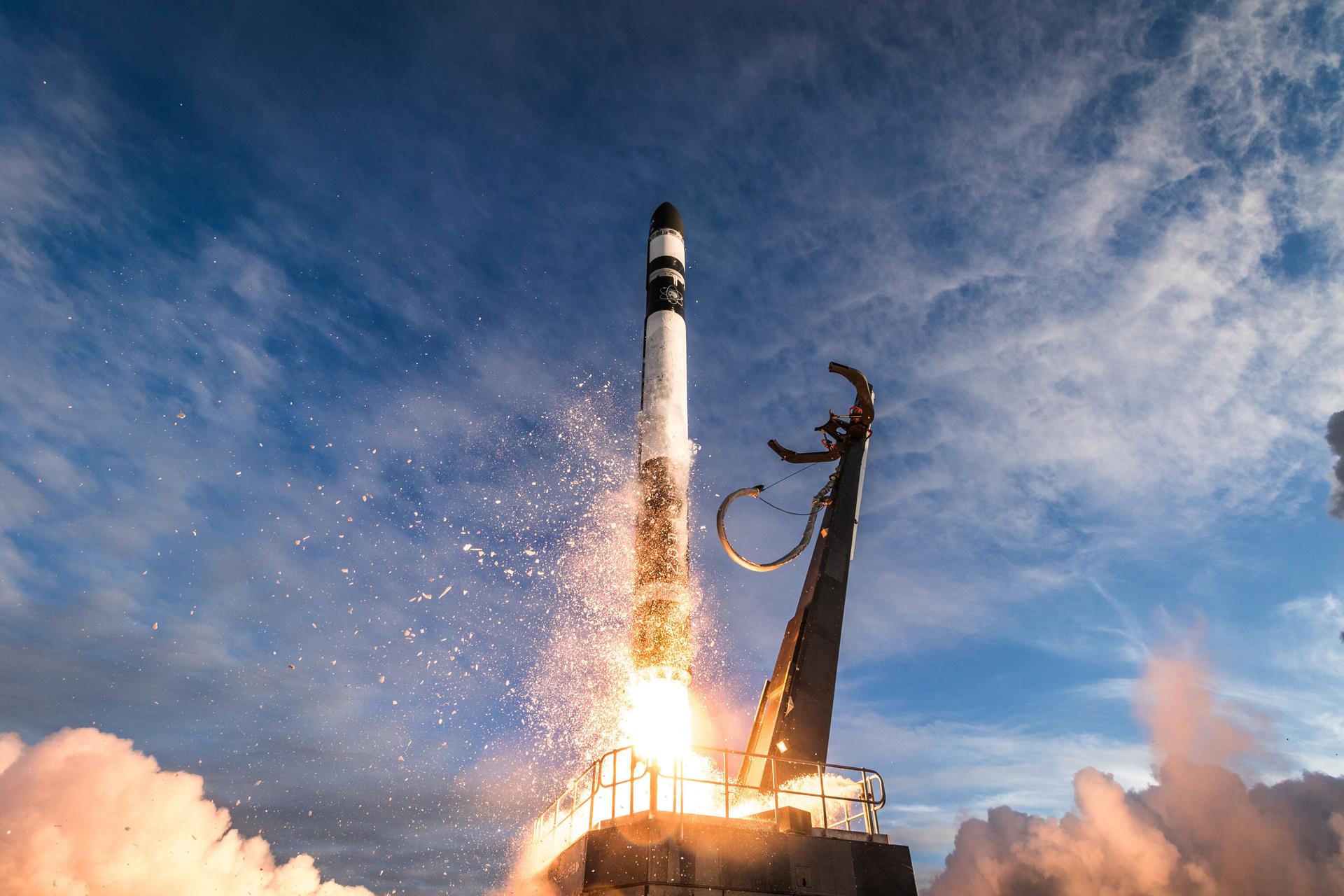
Rocket Lab is preparing to launch its light-lift Electron rocket on a mission named "The Grain Goddess Provides", carrying a synthetic aperture radar (SAR) satellite for Japanese Earth-observation company iQPS. This is the seventh dedicated Electron flight for iQPS, continuing a multi-launch agreement between the two companies to build out iQPS's growing SAR constellation.
The mission lifts off from Rocket Lab's Launch Complex 1 on the Mahia Peninsula in New Zealand, the company's dedicated Electron spaceport.
When is the launch?
The launch is currently targeted for 31 July 2026 at 00:00 UTC. The status is listed as TBD, meaning the date and time remain subject to change as the mission approaches. Rocket Lab typically confirms a firm launch window in the days ahead of liftoff.
| Detail | Information |
|---|---|
| Mission | The Grain Goddess Provides (iQPS Launch 7) |
| Rocket | Electron |
| Provider | Rocket Lab |
| Launch site | Launch Complex 1A, Mahia Peninsula, New Zealand |
| Target date/time | 31 July 2026, 00:00 UTC |
| Status | TBD |
What is the payload?
The payload is a SAR satellite for iQPS (Institute for Q-shu Pioneers of Space), a company based in Fukuoka, Japan. iQPS is building a constellation of small radar-imaging satellites designed to capture high-resolution imagery of Earth's surface day or night, regardless of cloud cover. Synthetic aperture radar is prized precisely because it works through darkness and weather, unlike optical imaging.
Rocket Lab's dedicated launch model is well suited to constellation operators like iQPS, allowing each satellite to be delivered to its precise target orbit rather than sharing a rideshare that may not match the desired inclination or altitude. Each mission in the series carries a whimsical name drawn from Japanese mythology, a tradition iQPS has continued across its Electron flights.
Tell me about the Electron rocket
Electron is a two-stage small-lift orbital rocket capable of delivering roughly 300 kg to low Earth orbit. It is notable for its carbon-composite structure and its Rutherford engines, which use electric-pump-fed propulsion — a first for an orbital launch vehicle. Rocket Lab has also pioneered booster recovery attempts, retrieving Electron first stages from the ocean to study reusability.
Launch Complex 1 on the Mahia Peninsula is the world's first private orbital launch site and remains Electron's primary home, offering a wide range of orbital inclinations thanks to its remote coastal location.
How to watch live
Rocket Lab typically streams its Electron launches live, with a webcast beginning shortly before liftoff. As the date approaches, confirm the exact launch window and check for the official stream link. You can follow the countdown and see the rocket's position in real time on the Cosmik rocket launch schedule, and explore more Rocket Lab missions on our dedicated hub.
Because the launch time is still TBD, enabling launch alerts is the best way to avoid missing an updated window.
What happens after deployment?
Once Electron's Kick Stage delivers the iQPS satellite to its target orbit, the spacecraft will begin commissioning before joining the operational constellation. You'll be able to find the newly deployed satellite and track its orbit on the Cosmik live 3D map, alongside every other object in orbit. If you're new to orbital tracking, our guide on how to track satellites explains how it works.
Where does the data come from?
Launch details are drawn from public launch databases and are subject to change. For the underlying source, see The Space Devs Launch Library. Background on the vehicle and operator is available via Electron and Rocket Lab on Wikipedia, and the Mahia Peninsula launch site.
Follow the launch live on Cosmik
Track "The Grain Goddess Provides" from countdown to orbit on Cosmik's real-time launch tracker, and follow the iQPS SAR satellite on our live 3D map after deployment. Enable free launch alerts so you never miss an updated liftoff time.
Follow this mission live in 3D and get a free alert before liftoff.
Open the live map →Sources
Next launches
- Falcon 9 Block 5 | Starlink Group 17-48 — launch time, how to watch (11 July 2026) — 11 July 2026 at 02:00 UTC
- Gravity-1 | Unknown Payload — launch time, how to watch (12 July 2026) — 12 July 2026 at 02:00 UTC
- Vikram-I | Demo Flight — launch time, how to watch (12 July 2026) — 12 July 2026 at 05:00 UTC